

To start a shoe business, you choose a model (retail, online, reselling, custom, or manufacturing), validate a niche and target customer, write a business plan, register the business and brand, source or make your footwear, and sell through a store or online channel.
The footwear market is large and growing — worth USD 529.25 billion globally in 2026 and projected to reach USD 912.13 billion by 2034, a 7.04% CAGR, according to Fortune Business Insights.
This guide is the owner’s roadmap: the models, the money, the legal steps, and the product imagery that sells shoes online.
Key takeaways
- The global footwear market is worth USD 529.25 billion in 2026, growing at a 7.04% CAGR to USD 912.13 billion by 2034 (Fortune Business Insights); the US market alone is USD 92.67 billion.
- There are five shoe business models: online store, retail store, reselling, custom/design, and manufacturing — online and reselling have the lowest barrier to entry.
- Startup cost ranges widely by model, from a few hundred dollars (reselling, dropship) to tens of thousands (manufactured line with inventory).
- Footwear is a high-return category online because fit is hard to judge on screen — plan for returns from day one.
- Product imagery is the deciding sales lever online: 56% of shoppers’ first action on a product page is to look at the image (Baymard Institute).
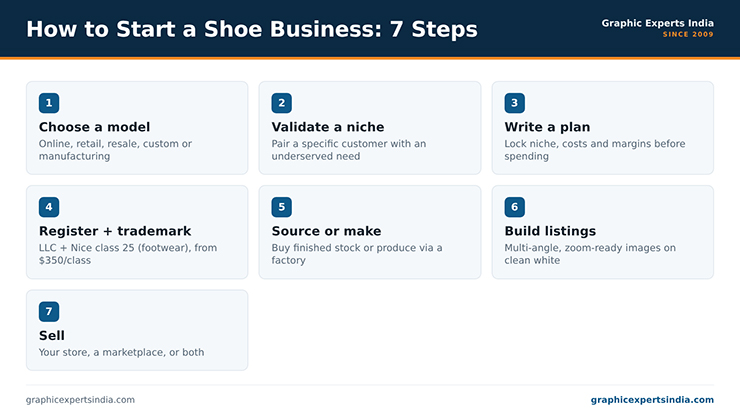
Figure — How to start a shoe business — 7 steps. (Place images/p1-7-steps.png here.)
This is the pillar for a cluster of owner guides; each step below links to the deep-dive. For the business-planning stage specifically, start with the shoe business plan template.
Is a shoe business worth starting in 2026?
A shoe business is worth starting in 2026 because footwear demand is large, growing, and segmented enough to leave room for focused new entrants.
The global footwear market is worth USD 529.25 billion in 2026 and is forecast to grow at a 7.04% CAGR to USD 912.13 billion by 2034 (Fortune Business Insights); the US market alone is USD 92.67 billion in 2026.
Growth at that scale means the category is not winner-take-all — niches in comfort, sustainability, specific sports, and underserved sizes continue to open.
The opportunity comes with a known difficulty: footwear is a high-return category online, because fit is hard to judge from a screen. That single fact shapes every decision below, from which model you choose to how you photograph the product. The owners who win plan for returns and fit from day one.
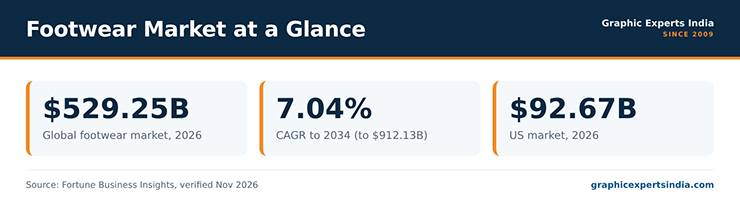
Figure — Footwear market at a glance. (Place images/p1-market.png here.)
What are the shoe business models?
There are five main shoe business models, and your choice determines your startup cost, your skills, and your margins.
| Model | What you do | Startup cost | Best for |
|---|---|---|---|
| Online store | Sell footwear through your own e-commerce site | Low–medium | Reach and margin without retail rent |
| Retail store | Sell from a physical location | High | Local demand and lease capital |
| Reselling | Buy and resell sneakers / limited editions | Very low | Lean starters with sourcing skill |
| Custom / design | Design or customize footwear to order | Low–medium | Designers reliant on photography |
| Manufacturing | Produce footwear at scale | Very high | Owners with capital and supply chain |
The lowest-barrier entry is an online store or a reselling operation, because neither requires a lease or a factory. The online shoe store guide, the shoe reselling guide, the shoe manufacturing guide, and the wholesale and sourcing guide each cover one model in full. Choose the model first, because it changes everything downstream.
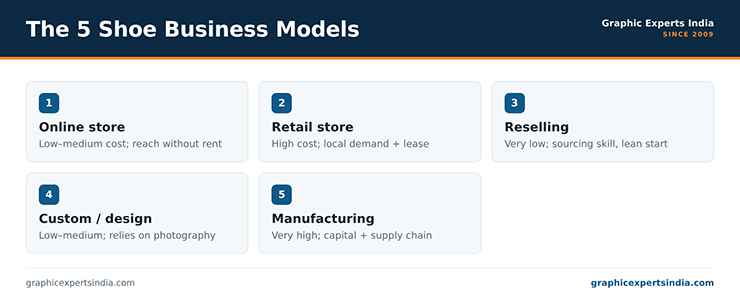
Figure — The five shoe business models. (Place images/p1-models.png here.)
How much does it cost to start a shoe business?
Startup cost depends entirely on the model: a reselling or dropship operation can start for a few hundred to a few thousand dollars, while a custom-manufactured line with inventory runs into the tens of thousands.
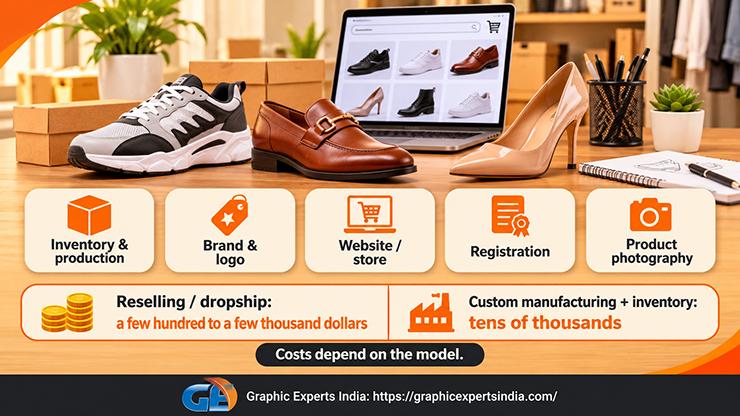
The main cost lines are inventory or production, a brand and logo, a website or store, business registration, and product photography. A lean online entrant spends most on first inventory and imagery; a manufacturer spends most on tooling and minimum order quantities.
Because the numbers swing so widely by model, treat the detailed budget as part of your plan rather than a fixed figure. The shoe business plan template sets out the cost lines to fill in, and the wholesale and sourcing guide covers the inventory cost that usually dominates a new footwear budget.
How do you choose a niche and target customer?
You choose a shoe niche by pairing a specific customer with a specific need the big brands underserve. “Shoes” is too broad to compete on; “comfortable wide-fit shoes for nurses” or “handmade leather sneakers for men” is a position you can own.
Research demand through keyword volume and competitor gaps, confirm the customer can be reached affordably, and check that the niche supports a price point with workable margin.
Women’s footwear is a strong anchor niche — “shoes business women” is one of the highest-volume owner queries — and it spans comfort, fashion, athletic and occasion segments. Narrowing within it, rather than selling “women’s shoes” broadly, is what makes a new brand findable.
The niche decision then feeds the brand name and identity, covered next.
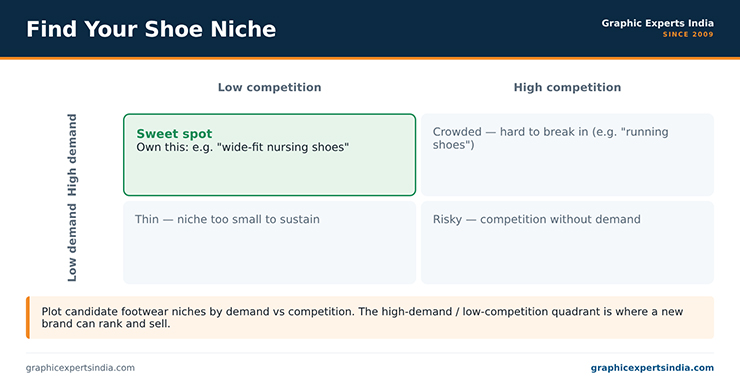
Figure — Find your shoe niche (demand vs competition). (Place images/p1-niche-matrix.png here.)
How do you name and brand a shoe business?
You name a shoe business with a short, memorable, available name that signals your niche, then build a logo and visual identity around it. The name must be legally available — check it against a trademark search before committing — and available as a domain and social handle.
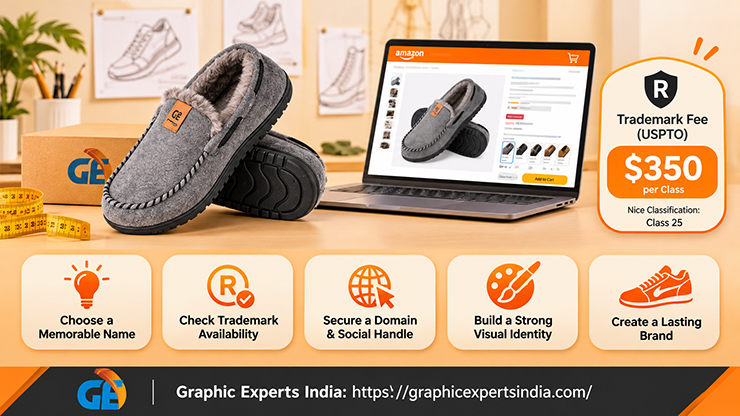
A footwear brand’s identity carries more visual weight than most, because customers judge shoes on looks, so the logo, colors and photography style need to feel considered from launch.
The full process, with name ideas, logo examples and the availability checks, is in shoe business names, logos and branding ideas. Registering the name as a trademark falls under Nice classification class 25, which covers footwear as well as clothing, at a US filing fee from USD 350 per class (USPTO).
How do you register a shoe business?
You register a shoe business by choosing a legal structure (sole proprietorship, LLC, or corporation), registering with your state or country, obtaining any required licenses and a tax ID, and trademarking the brand name.
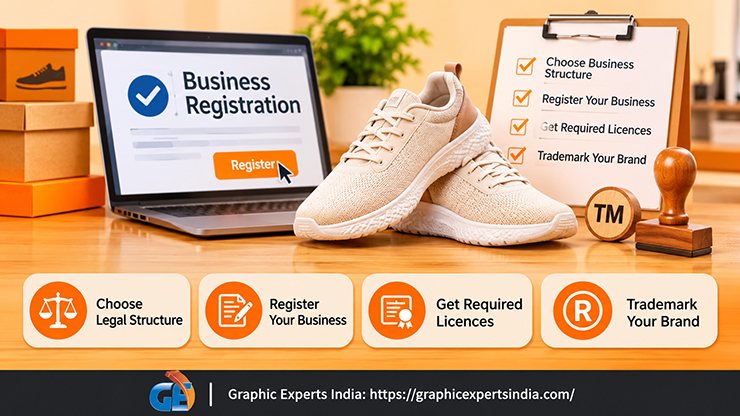
An LLC is the common choice for a new footwear brand because it separates personal and business liability at a modest cost. Registration requirements vary by location, so confirm your own jurisdiction’s steps with the relevant authority.
The trademark step matters more in footwear than in many categories, because brand knock-offs are common. Filing in class 25 (footwear and clothing) and, if you sell through a store, class 35 (retail services) protects the name you build.
This is general information, not legal advice; confirm your filings with a qualified professional.
How do you source or make the shoes?
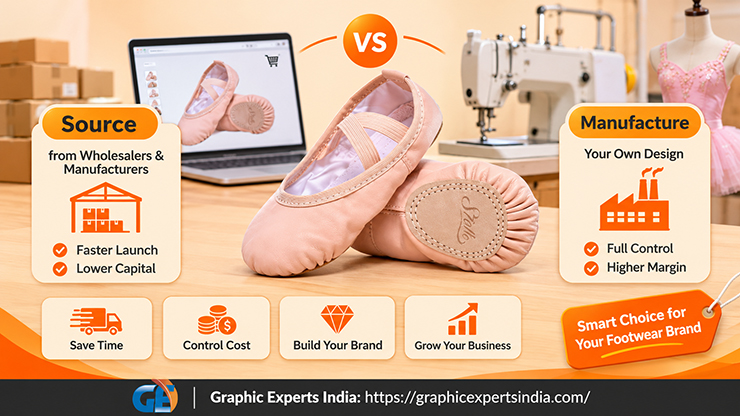
You either source finished footwear from wholesalers and manufacturers, or you produce your own through a factory. Sourcing is faster and needs less capital; manufacturing gives control over design and margin but requires minimum order quantities and tooling.
Most new footwear brands start by sourcing or using a manufacturer’s existing lasts, then move to custom production once demand is proven.
The two routes have their own guides: shoe wholesale and sourcing for buying finished stock, and how to start a shoe manufacturing business for producing your own. Both decisions hinge on your target margin and the capital you can commit to inventory.
How do you sell shoes online?
You sell shoes online through your own e-commerce store, a marketplace, or both, and the deciding factor after channel is product imagery. Footwear returns heavily on fit and on the gap between the photo and the real shoe, so the images do more work here than in almost any category.
A shoe listing needs multiple angles — top, side, back and sole — on a clean background, at a size that lets the buyer zoom and judge the material.
This is where product photography stops being cosmetic and becomes a revenue lever. The footwear e-commerce guide covers how imagery drives conversion and cuts returns, and the online shoe store guide covers the channel and platform choice.
Clean, consistent shoe images are the single asset that both lifts the sale and reduces the return.
Graphic Experts India — shoe photo editing from $0.39/image. A footwear shoot comes back with uneven backgrounds and color that drifts from the real shoe.
GEI’s clipping path, background removal, shadow making and color correction turn raw shots into clean, zoom-ready listing images — 24-hour turnaround, three-step QA, first edits free with no credit card. (Mid-article services promo callout.)
How Graphic Experts India helps shoe sellers
Every shoe a seller lists online needs clean, consistent, zoom-ready images, and that editing is the work Graphic Experts India does.
A footwear shoot comes back with uneven backgrounds, stray shadows and color that drifts from the real shoe; editing fixes all three.
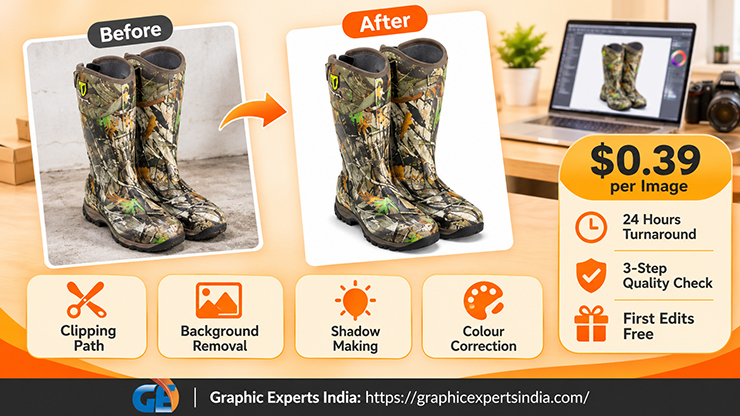
Clipping path and background removal put each shoe on a clean white background, shadow making grounds it so it does not float, and color correction trues the leather or fabric to the real product so the buyer receives what they saw.
Editing starts at $0.39 per image, turnaround averages 24 hours, every file clears a three-step quality check, and the first edits are free with no credit card.
Graphic Experts India has edited e-commerce product images, including footwear, since 2009. Once your plan is set, the footwear e-commerce imagery guide shows how those images pay for themselves.
Frequently asked questions
Start with a low-barrier model — an online store or reselling — in a specific niche you understand, write a simple plan, register the business, source finished stock rather than manufacturing, and sell online with strong product images. Experience in the niche and in sourcing matters more than footwear-manufacturing expertise at the start.
It depends on the model: a reselling or dropship operation can start for a few hundred to a few thousand dollars, while a manufactured line with inventory runs into the tens of thousands. The largest cost lines are inventory or production, branding, a website, and product photography.
Footwear is a large, growing market — USD 529.25 billion globally in 2026, growing 7.04% a year to 2034 (Fortune Business Insights) — but margins depend on model and returns. Online footwear returns heavily on fit, so profitability depends on controlling returns and keeping customer-acquisition cost below margin.
An online store or a reselling operation, because neither needs a retail lease or a factory. Both can start lean, test a niche quickly, and scale into custom production or retail once demand is proven.
Trademarking is strongly advisable in footwear, where knock-offs are common. Register the brand name under Nice class 25 (footwear and clothing), from USD 350 per class in the US (USPTO), and add class 35 if you run a store. Confirm your filings with a qualified professional.
A lean online or reselling start can launch in weeks once the niche, stock and listings are ready; a manufactured line takes months because of design, prototyping and production lead times. The imagery and listings are usually the fastest part to get right when the editing is outsourced.

Salim Ahmed is the CEO of Graphic Experts India, with over 25 years of expertise in photo editing, clipping path, image retouching, and eCommerce image editing services.