

You generally cannot use Amazon product images without permission, because they are copyrighted works owned by Amazon or the brand that supplied them.
Amazon Associates may display certain images, but only through the Product Advertising API or Creators API — not by copying or scraping them from product pages. This guide explains who owns listing images, what affiliates and sellers may and may not do, and how a seller reports stolen listing images.
It is general information, not legal advice; confirm your own case with a qualified attorney.
Understanding image rights matters because the safest image is one you own outright. For the rules your own images must meet, see Amazon Product Image Requirements 2026.
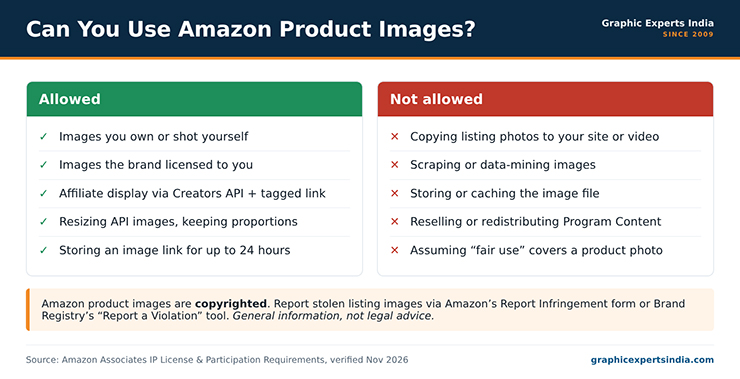
Figure 1. What you can and cannot do with Amazon product images.
Are Amazon product images copyrighted?
Yes. Amazon product images are copyrighted works, owned either by Amazon or by the brand or seller who supplied them. Copying a listing image and reusing it — on another store, a blog, a social post, or a video — without permission is copyright infringement, regardless of whether the image carries a visible watermark.
Amazon’s Associates agreement describes its Program Content as being of a “special, unique, extraordinary character” and reserves the right to seek injunctive relief for infringement of intellectual property.

The common “it’s just a product photo” assumption is wrong. A product photograph is a creative work protected from the moment it is taken, and the right to use it belongs to its owner. Permission, a licensee, or your own photography is what makes an image safe to use.
Can Amazon affiliates use product images?
Using an Amazon product image on YouTube, Pinterest, a blog, or any site you control carries the same rule: you need the right to use that image.
Being an Amazon affiliate does not grant a blanket license to copy listing photos onto those platforms; the API-and-tagged-link conditions above still apply, and caching the image file still breaks the terms.
“Fair use” is frequently misread here — it is a narrow, fact-specific legal doctrine, not a general permission to republish commercial product photos to promote a sale.
The reliable way to show a product you are promoting is to use an image you are licensed to use: one the brand supplied for that purpose, one from an official affiliate tool, or your own photograph of the product. Anything else risks a takedown or a claim from the rights holder.
Amazon Associates may use certain product images, but only through official channels. Amazon’s Associates IP License states that you may obtain Product Advertising Content — which includes images — by making calls to the Creators API or the PA API, and it specifically excludes “any use of data mining, robots, or similar data gathering and extraction tools.”
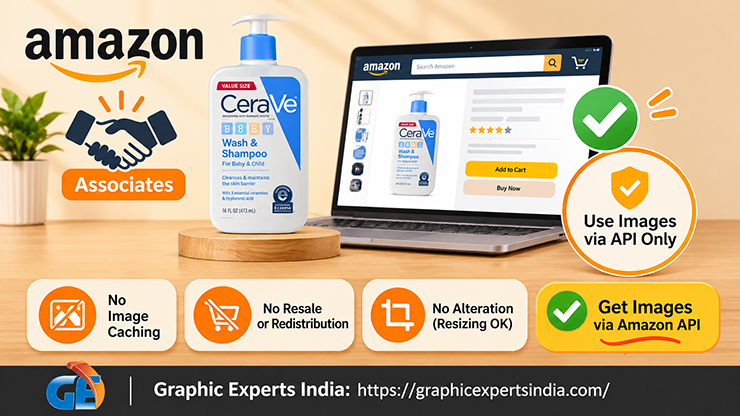
In plain terms, an affiliate pulls images through Amazon’s API with a tagged link, and may not scrape or copy them from the page.
Three further rules bind affiliates who use API images:
- No image caching. The license states, “You will not store or cache Product Advertising Content consisting of an image.” You may store a link to an image for up to 24 hours, not the image file itself.
- No resale or redistribution. You “may not sell, resell, redistribute, sublicense, or transfer any Program Content.”
- No alteration, but resizing is allowed. You “will not add to, delete from, or otherwise alter any Program Content,” though you may resize a graphic image while keeping its original proportions. Content must be removed promptly once it no longer appears on an Amazon site.
Consequently, the manual download-and-upload of a product image to an affiliate website is outside the Associates terms.
Pulling the image live through the API, with the required tagged link, is the compliant route. The technical detail of getting image URLs through the API is in how to get and download Amazon product images and image URLs by ASIN.
Can you use Amazon product images on YouTube, Pinterest or a website?

Using an Amazon product image on YouTube, Pinterest, a blog, or any site you control carries the same rule: you need the right to use that image.
Being an Amazon affiliate does not grant a blanket license to copy listing photos onto those platforms; the API-and-tagged-link conditions above still apply, and caching the image file still breaks the terms.
“Fair use” is frequently misread here — it is a narrow, fact-specific legal doctrine, not a general permission to republish commercial product photos to promote a sale.
The reliable way to show a product you are promoting is to use an image you are licensed to use: one the brand supplied for that purpose, one from an official affiliate tool, or your own photograph of the product. Anything else risks a takedown or a claim from the rights holder.
How do sellers report stolen listing images?

A seller whose listing images were copied by another seller reports it to Amazon as an intellectual-property infringement. Amazon provides a Report Infringement form for rights owners, and sellers enrolled in Amazon Brand Registry use the “Report a Violation” tool to flag a listing that uses their images without permission.
A formal DMCA takedown notice is the legal mechanism behind these reports. To report, you identify the infringing listing, state your ownership of the image, and submit the claim.
The strongest position in any such dispute is clear ownership of the original image. A seller who holds the source files and the photographer’s rights can prove the image is theirs; a seller using images they do not own cannot. Owning your images is both the defense and the remedy.
Why owning your images is the real solution
The way out of every rights problem above is to own the images you use, and owning them starts with your own product photography.
An image you shot, or commissioned, and then had edited to Amazon’s standard is yours to use on your listing, your site, your social channels and your ads, without a license question and without a takedown risk.
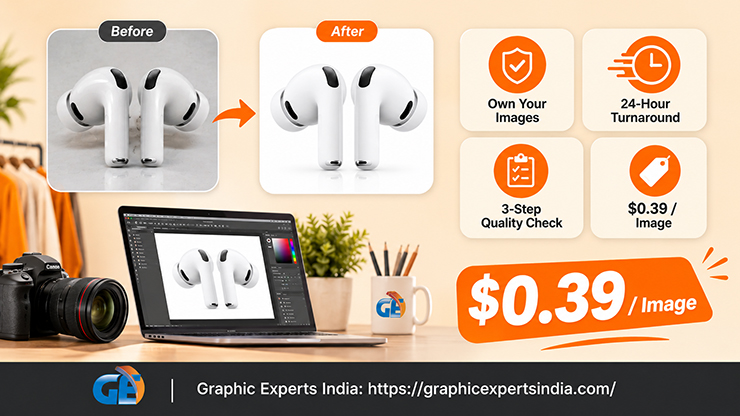
That is the position Graphic Experts India helps sellers reach: send your own product photos, and receive compliant, edited images you own outright.
The service hub is amazon photo editing, which edits your own photography to the Amazon standard — pure white background, 85% fill, zoom-ready sizing. Editing starts at $0.39 per image, turnaround averages 24 hours, every file clears a three-step quality check, and the first edits are free with no credit card.
For the broader question of what editing to commission, see Amazon image editing services. Graphic Experts India has produced seller-owned e-commerce imagery since 2009.
Frequently asked questions
Only with the right to use them. Amazon’s images are copyrighted, and Associates may display them only through the Creators API or PA API with a tagged link — not by copying or caching the files. The safe route is an image you own or are licensed to use.
Yes. They are copyrighted works owned by Amazon or the brand that supplied them, protected from the moment the photo is taken. A visible watermark is not required for copyright to apply, and reusing an image without permission is infringement.
Amazon Associates may use product images obtained through the Creators API or PA API with a tagged link. The terms prohibit scraping, storing or caching the image file (a link may be stored for up to 24 hours), and reselling or redistributing the content. Manual copy-and-upload is outside the terms.
Not by copying them from the listing. You need the right to use the image — one the brand supplied, an official affiliate-tool image, or your own photo of the product. Being an affiliate does not grant a blanket license to republish listing photos.
Report it to Amazon as IP infringement: use Amazon’s Report Infringement form, or the “Report a Violation” tool if you are in Brand Registry, backed by a DMCA notice. Identify the infringing listing and prove your ownership of the image. Holding the original source files is what proves the claim.

Salim Ahmed is the CEO of Graphic Experts India, with over 25 years of expertise in photo editing, clipping path, image retouching, and eCommerce image editing services.