

Amazon layers category-specific image rules on top of its general site standards, and the category rules are what trip up sellers who assume one compliant image works everywhere.
Adult clothing must be shown on a human model; baby clothing must be shot flat; shoes face left at an angle; pet products must show the animal standing; beauty and health keep ingredient text out of the main image.
This guide gives the main-image rule for each major category on top of the universal standard.
Every category still obeys the general rules — pure white main-image background, 85% fill, zoom-ready size. For that universal set, start with Amazon Product Image Requirements 2026.
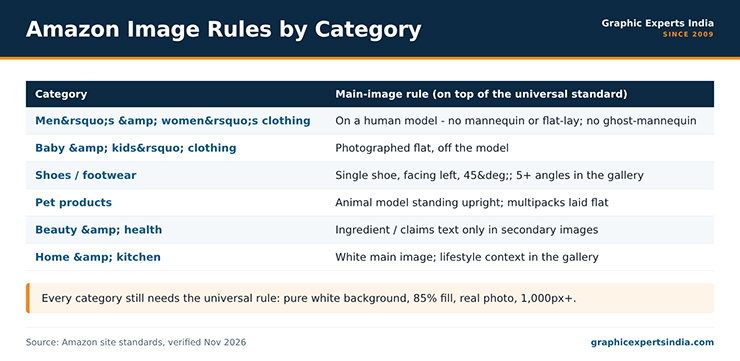
Figure 1. Amazon main-image rules by product category.
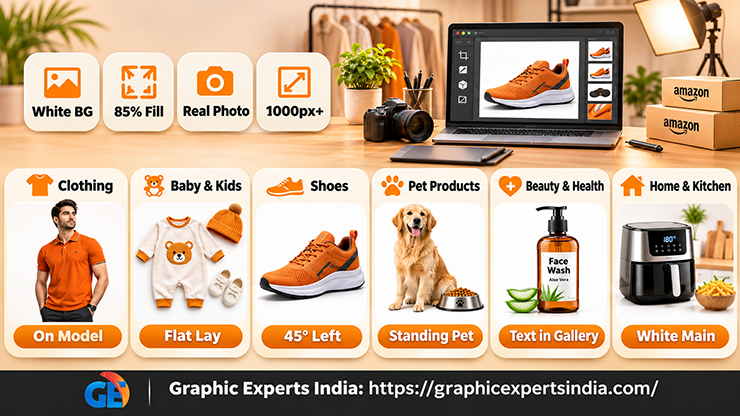
Before the category exceptions, four rules hold everywhere. The main image needs a pure white background at RGB 255, 255, 255. The product must fill at least 85% of the frame. The image must be a real photograph with no text, logos or watermarks.
And the file must be at least 1,000 pixels on the longest side for zoom. The category rules below add to this base; they never remove it. The full main-image standard is in the main image requirements guide.
| Category | Main-image rule on top of the universal standard |
|---|---|
| Men’s & women’s clothing | On a human model; no mannequin or flat-lay as the main image |
| Baby & kids’ clothing | Photographed flat, off the model |
| Shoes / footwear | Single shoe, facing left at a 45° angle; 5+ angles across the gallery |
| Pet products | Animal model standing upright; multipacks laid flat |
| Beauty & health | Ingredient and claims text only in secondary images |
| Home & kitchen | White main image; lifestyle context encouraged in the gallery |
Clothing and apparel: on a human model

Men’s and women’s clothing must be shown on a human model in the main image. Amazon’s apparel standard does not accept a flat-lay or mannequin shot as the main image for adult clothing, and it allows no ghost-mannequin exception in that slot.
This is the single most common apparel rejection, because sellers assume the hollow-garment look that works on their own site also works as an Amazon main image.
Ghost mannequin is still valuable — in the secondary slots, and on other marketplaces that permit it. The hollow-garment effect shows fit and structure cleanly, which is why it belongs in the gallery even when a model shot leads.
Ghost mannequin / neck joint editing produces that effect for the secondary images and for platforms beyond Amazon. The fuller comparison of model options is in the apparel guide to ghost mannequin vs on-model photography, and the cross-platform rules are in platform image requirements for clothing.
Baby, kids’ and multi-pack apparel: flat
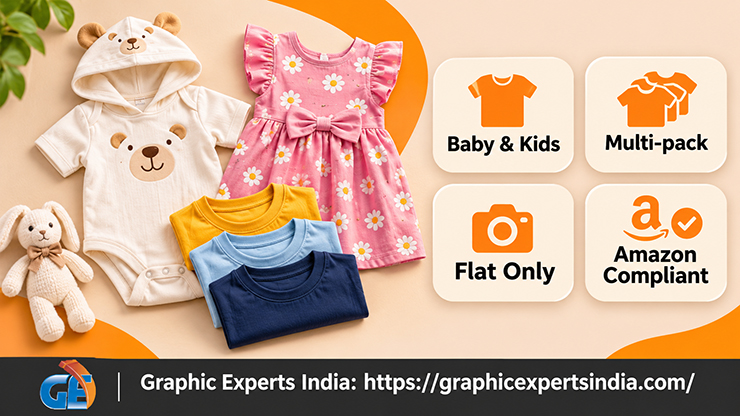
Baby and kids’ clothing is the reverse of adult apparel — it must be photographed flat, off the model, for the main image. Multi-pack apparel follows the same flat rule.
The reasoning is category-specific sensitivity around images of children, and Amazon enforces it as firmly as the on-model rule for adult clothing. A seller listing both adult and children’s lines therefore runs two different main-image standards in the same catalogue.
Shoes and footwear: angled, single shoe
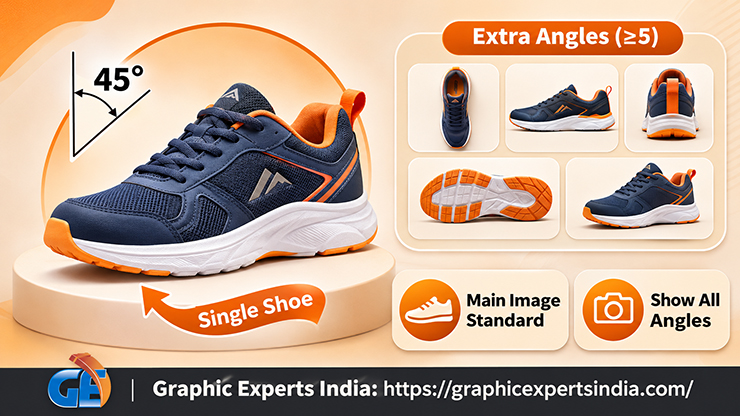
A shoe main image shows a single shoe, facing left, at roughly a 45-degree angle. The single-shoe, left-facing convention keeps footwear listings visually consistent across search results.
Across the rest of the gallery, five or more angles are recommended — top, side, back and sole — because footwear buyers inspect the shoe from every side before buying. The main image sets the standard pose; the secondary slots cover the angles.
Pet products: animal standing, product clear

Pet product main images follow the general standard, with one category-specific rule: when the image includes an animal model, the animal must be standing upright, not sitting, kneeling or lying down. Multipacks, such as a set of toys, are laid flat on a neutral surface.
Show the product outside its packaging unless the packaging is itself a selling point, such as a gift set, and keep out props that are not part of the purchase — a collar’s main image should not add a leash or a treat unless those ship with it.
Beauty, health and household: text stays in the gallery

Beauty and health products keep their ingredient lists, directions and claims out of the main image and in the secondary slots. The main image shows the product and its packaging on white; the ingredient panel, usage instructions and benefit callouts go in the gallery, where text is allowed.
The packaging shown must match the product the buyer receives. Because color accuracy matters for skin, health and cosmetic products, color correction to true the product to the real item is often the decisive edit for this category.
Home and kitchen: white main, lifestyle gallery
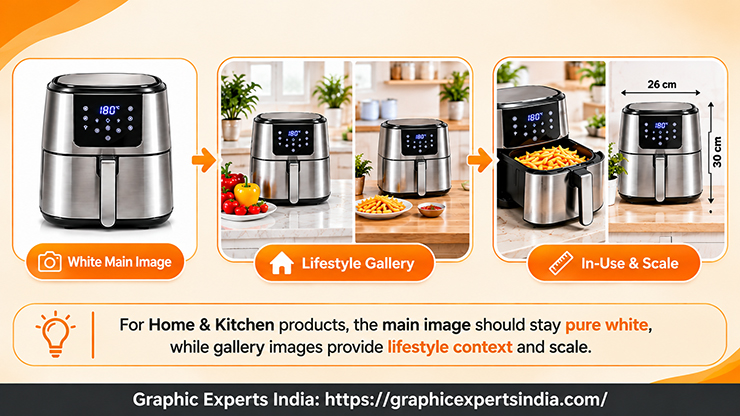
Home and kitchen products use the standard pure-white main image, and the category rewards lifestyle context in the gallery more than most.
A kitchen tool or a home item is easier to judge in a real setting — on a counter, in a room — so the secondary slots should carry contextual shots that show the product in use and at scale. The main image stays on white; the gallery does the contextual work.
How Graphic Experts India handles category rules

Each category rule maps to an editing decision, and Graphic Experts India applies the right one per category. Ghost mannequin / neck joint builds the hollow-garment effect for apparel secondary images. Color correction trues beauty, health and skin-tone products to the real item.
Background removal and sizing produce the compliant white main image every category shares. One brief covers a mixed catalogue, with the correct rule applied to each line.
Editing is priced per image — color correction from $0.99, ghost mannequin from $1.49 — with a 24-hour average turnaround, a three-step quality check, and the first edits free with no credit card. Graphic Experts India has edited category-specific e-commerce imagery since 2009.
Frequently asked questions
Yes, for adult men’s and women’s clothing the main image must be on a human model. Amazon does not accept a flat-lay or mannequin, including a ghost-mannequin effect, as the main image for adult apparel. Baby and kids’ clothing is the opposite — it must be shot flat, off the model.
Pet products follow the general standard — pure white main image, 85% fill — plus a category rule: an animal model must be standing upright, not sitting or lying. Multipacks are laid flat on a neutral surface, and props not included with the product are not allowed.
No. Ingredient lists, directions and claims text must go in the secondary images, not the main image. The main image shows the product and its packaging on white, and the packaging shown must match the product the buyer receives.
The main image shows a single shoe facing left at about a 45-degree angle. Across the gallery, five or more angles are recommended — top, side, back and sole — because footwear buyers inspect the shoe from every side before deciding.
No. Category rules add to the universal standard — pure white main-image background, 85% fill, real photo, 1,000-pixel minimum. A category image must satisfy both the general rules and its category-specific rule to stay compliant.

Salim Ahmed is the CEO of Graphic Experts India, with over 25 years of expertise in photo editing, clipping path, image retouching, and eCommerce image editing services.